Cornelius Norbertus Gijsbrechts / c.1670 (museum range 1668–1672)
The front that pretends to be a back
What would you expect to find if you turned this painting around?
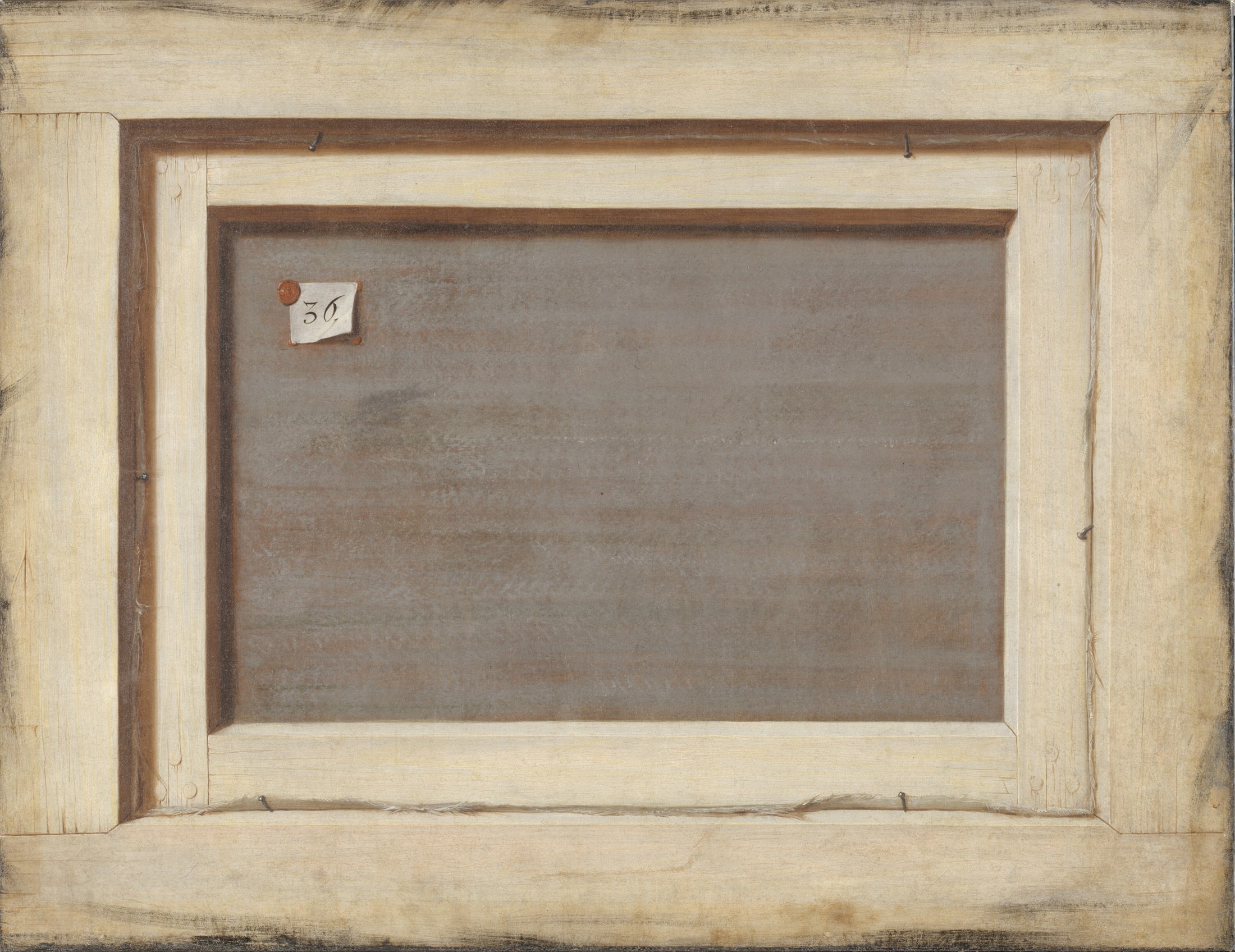
Cornelius Norbertus Gijsbrechts, The Reverse of a Framed Painting, c.1670 (museum range 1668–1672). Oil on canvas. SMK - National Gallery of Denmark, Copenhagen.
Look first
Before reading the title, decide which side of an object you think you are seeing. A wooden surround, stretched fabric and a little label seem to announce the back of a painting. The ordinary subject encourages a practical reaction: perhaps it has been hung the wrong way round.
Now examine the surface as an image. The wood, shadows and canvas-like centre belong to the painted front. Gijsbrechts makes a picture of the kind of thing we usually treat as the support for a picture.
The result works through recognition rather than spectacle. We have learned to take certain materials and arrangements as evidence that we are behind an artwork. The painter gives us those signals where we least expect a performance.
The detail
The little paper label helps by seeming incidental. It appears to belong to storage, ownership or handling, rather than to a carefully composed subject. Small apparent accidents can make an imitation more persuasive than an immaculate surface.
A question to take back to the picture
Which detail first convinced you this was the back?
What we know
The SMK identifies the work as an oil painting from 1668–1672. Its exact reproduction is marked Public Domain. Technical research by Anne Haack Christensen describes Gijsbrechts's imitation of canvas texture and preparation traces. That research does not resolve every question about the exposed-looking grey area.
One way to read it
The picture turns a habit of looking into its subject. We expect a painting to offer a different world, but here it offers the apparent absence of an image. Realising the trick sends attention back to the physical object and the painter's decisions.
Try it yourself
Write down three cues that make a surface seem unplanned: a label, a scuff, an uneven edge. Then find their equivalents in this painting. Ask how carefully a painter might need to organise an apparent accident.
Sources, freely available
Image credit and use
Cornelius Norbertus Gijsbrechts, Trompe l’oeil. The Reverse of a Framed Painting, c.1670 (SMK date range1668–1672), oil on canvas. SMK – National Gallery of Denmark, KMS1989. Public Domain. Faithful crop/scaling only; the whole photograph is unchanged. Exact source record. No museum endorsement is implied.